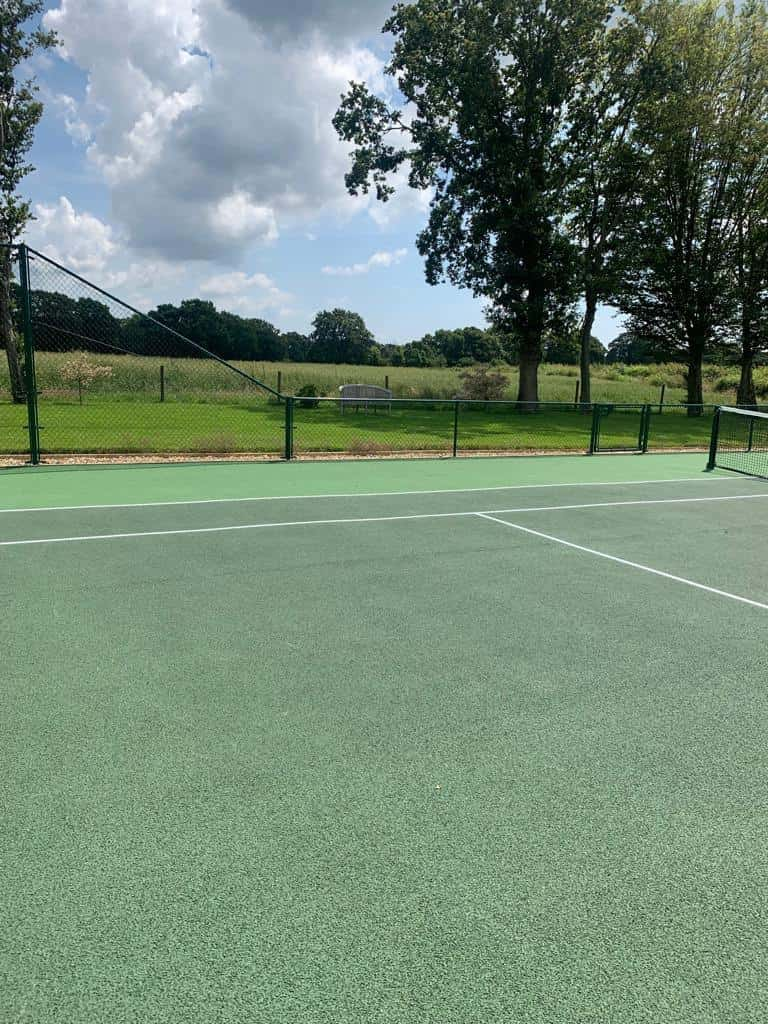
A newly constructed tennis court should provide a stable, even and predictable playing surface. When cracks, standing water, loose material or uneven areas appear soon after installation, the visible defect is often a symptom of a problem elsewhere in the court system.
The performance of a tennis court depends on its subgrade, base construction, drainage, surfacing materials and installation conditions. For facilities and property owners in Kent, UK, understanding these elements can help explain why early deterioration occurs and why professional investigation is important.
Why Do Problems Develop on New Tennis Court Surfaces?
Inadequate Ground Preparation
Every tennis court relies on the ground beneath it. If unsuitable soil, soft areas or organic material remain below the construction, the subgrade may move after installation.
This movement can create depressions, cracking or variations in the playing surface. A professional contractor should assess the ground conditions, remove unsuitable material where necessary and prepare a stable formation before constructing the base.
Insufficient Base Compaction
The base distributes loads and provides a firm platform for the finished surface. If the material is installed in layers that are too deep or compacted inconsistently, pockets of weakness may remain.
These areas can settle at different rates, leading to dips and surface distortion. Consistent compaction across the complete court is essential because small variations can affect both drainage and ball response.
Poor Drainage Design
Water is one of the main causes of premature court deterioration. A surface may retain water if its falls are incorrect, the surrounding ground directs rainfall towards the court or the drainage system cannot remove water effectively.
Persistent moisture can weaken supporting layers, encourage movement and leave parts of the court unusable after rainfall. Drainage must therefore be planned around the site rather than added as an afterthought.
Incorrect Surface Levels
Tennis courts require carefully controlled gradients that move water away without noticeably affecting play. If levels are uneven or the finished falls are insufficient, water may collect in shallow depressions.
Ponding is not merely an inconvenience. Repeated wetting can affect coatings, encourage organic growth and accelerate deterioration in vulnerable areas. Accurate level control is required throughout the base and surfacing stages.
Unsuitable or Incompatible Materials
The materials used must suit the court design, expected level of use and supporting construction. Problems can arise when layers are incompatible or when the surface specification does not match the site conditions.
Each component must work as part of a complete system. A high-quality surface cannot compensate for an unstable base, while a sound base may still perform poorly if unsuitable coatings or aggregates are applied above it.
Installation During Unfavourable Conditions
Temperature, moisture and weather conditions can affect how court surfacing materials bond, cure and settle. Applying coatings to a damp surface or continuing work when conditions are unsuitable may interfere with adhesion.
Rushing the installation between periods of poor weather can also prevent layers from curing correctly. An experienced contractor should monitor the conditions and allow sufficient time between stages.
Inadequate Curing Before Use
Different materials require appropriate curing or setting time before the court is opened for play. Using the surface too early can mark coatings, disturb aggregates or interfere with the final finish.
The completed court may appear ready before every layer has reached the required condition. Following the contractor’s guidance on initial use is an important part of protecting a new installation.
Weaknesses Around Edges and Junctions
Court edges, drainage channels, net post foundations and transitions to adjoining surfaces require careful detailing. Poorly supported edges can break away, while gaps around fixed components may allow water into the construction.
These details occupy a relatively small part of the court but can become starting points for wider deterioration. Correct restraint, sealing and base preparation are essential around every junction.
Contamination Between Construction Layers
Dust, mud, loose debris or moisture between layers can prevent materials from bonding properly. This may lead to flaking, blistering or localised separation after the court enters use.
Good site management is therefore important throughout construction. Each layer should be properly finished, cleaned and inspected before the next material is installed.
Nearby Roots and Vegetation
Trees and established vegetation close to a court can influence ground conditions. Roots may disturb the base, while falling leaves and organic debris can obstruct drainage or encourage surface growth.
The site should be assessed for existing vegetation before construction begins. Removing visible growth without addressing the underlying root system may not prevent later movement.
Construction Traffic and Site Access
Heavy equipment must enter and leave the site during construction, but poorly managed traffic can disturb prepared areas or damage completed layers. Materials stored unevenly on the base may also create localised loading.
A planned construction sequence helps protect finished work and prevents earlier preparation from being compromised by later stages.
Lack of Early Maintenance
A new court still requires routine care. Leaves, silt and other debris should be removed before they block drainage or hold moisture against the surface. Small defects should also be assessed before repeated use and weather exposure enlarge them.
Maintenance should be appropriate to the surface type. Aggressive cleaning or unsuitable equipment can damage coatings and textured finishes even when the court is relatively new.
How Should Early Surface Problems Be Investigated?
The correct response depends on the cause and depth of the defect. A professional assessment should examine:
- the location and pattern of cracking;
- areas of standing water or poor falls;
- surface adhesion and consistency;
- base stability and localised settlement;
- drainage routes and surrounding ground levels; and
- edges, posts and adjoining surfaces.
Repairing only the visible surface may provide a temporary improvement if movement or moisture remains below. The underlying construction must be examined before the most suitable remedial approach can be identified.
Conclusion
Early tennis court problems are commonly linked to inadequate ground preparation, inconsistent compaction, poor drainage, unsuitable installation conditions or weaknesses around edges and junctions. The visible surface is only one part of the construction, so effective diagnosis must consider every supporting layer.
If a recently installed court in Kent, UK, is developing cracks, uneven areas or drainage problems, Tennis Court Construction Kent can assess the complete surface and identify the likely cause. Arrange a professional inspection to determine the appropriate next step without unnecessary work.
Call us on: 01580 234 693
Click here to find out more Tennis Court Construction Kent
Click here to complete our contact form and see how we can help with your court needs.