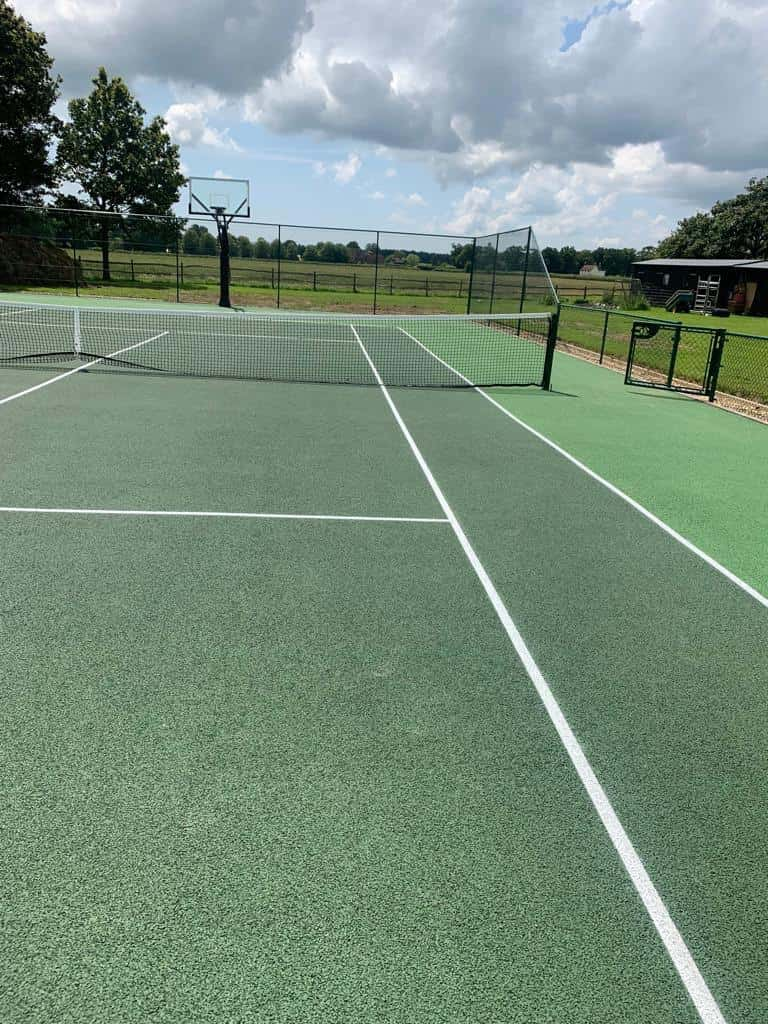
A small crack in a tennis court may initially appear to be a minor surface defect. However, some cracks provide the first visible indication of movement, drainage problems or deterioration within the layers beneath the playing surface.
Not every crack means that a court has serious structural damage. The important questions are why the crack formed, whether it is continuing to move and what condition the surrounding surface is in. Early professional assessment can help court owners across the UK address developing defects before they affect a wider area.
Why Small Tennis Court Cracks Should Be Investigated
A tennis court is a layered construction. Its surface depends on a stable base, effective drainage and properly prepared ground. If one of these elements begins to fail, cracking may develop at the surface even though the underlying cause is deeper.
Treating the visible line without identifying that cause can result in the crack returning. A professional inspection helps determine whether the problem is superficial or connected to movement within the court structure.
How Water Can Worsen a Small Crack
Once a crack opens, rainwater may penetrate the playing surface and reach the layers below. Repeated exposure can weaken poorly drained or already unstable material, reducing the support beneath the affected area.
During colder conditions, trapped water may also expand and contract as temperatures change. This can place additional pressure on the edges of the crack and gradually enlarge it. What began as a narrow opening may eventually develop into wider cracking, loose material or an uneven section of court.
Ground Movement and Settlement
Courts require a firm and consistently compacted foundation. If part of the ground settles more than the surrounding area, the layers above may be pulled apart.
Settlement can result from inadequate initial preparation, changes in ground conditions, water movement or deterioration within the base. Cracks caused by settlement often return after simple surface filling because the movement beneath them has not been corrected.
Warning signs of possible foundation movement include:
- Cracks that repeatedly reopen
- Several cracks forming in the same area
- Changes in surface level across the crack
- Localised dips or depressions
- Water collecting near the damaged section
- Cracks spreading towards the court edges
These signs do not confirm complete structural failure, but they indicate that the problem deserves closer investigation.
Poor Drainage and Standing Water
A tennis court should be constructed with suitable falls and drainage so that rainfall can leave the surface efficiently. Persistent standing water may indicate low spots, blocked drainage routes or movement within the court.
When water regularly gathers around a crack, it has more opportunity to penetrate the surface and weaken the supporting layers. The combination of poor drainage and cracking can accelerate deterioration, particularly when the court receives frequent use before it has dried.
Repairing the crack without addressing the water problem is unlikely to produce a durable result.
Tree Roots and Vegetation
Roots growing beneath or close to a court can sometimes lift or disturb the base. The resulting cracks may appear alongside raised sections, changes in level or damage near the court perimeter.
Vegetation emerging through a crack can make the opening wider, but it may be a symptom rather than the original cause. Removing visible growth alone will not correct movement below the surface. The affected area and its surroundings should be assessed before an appropriate repair is selected.
Why Repeated Cracks Matter
A crack that returns after previous treatment often suggests that movement is still taking place. The repair material may have sealed the surface temporarily, but the forces creating the opening remain active.
The crack’s position can provide useful information. Long straight cracks may follow a construction joint or weakness in the base, while interconnected cracking can indicate broader surface deterioration. Cracks accompanied by sinking, lifting or water retention are more concerning than stable hairline marks with no surrounding movement.
How Cracks Affect Play
Cracking is not only an appearance issue. Raised edges, loose fragments and uneven repairs can alter the way the ball bounces and make movement across the court less predictable.
As damage develops, water may remain within low areas and organic growth may establish along open cracks. These conditions can reduce the consistency of the playing surface and make routine maintenance more difficult.
Early attention helps preserve both the court’s condition and its playing characteristics.
What a Professional Inspection Should Consider
An effective inspection looks beyond the width of the visible crack. It should consider:
- The crack’s length, direction and pattern
- Whether the edges are level
- Signs of previous repair
- The condition of the surrounding surface
- Drainage and water retention
- Movement around court edges
- Loose or deteriorating surface material
- Evidence of settlement or root activity
This wider assessment allows the repair to be matched to the actual problem. A stable surface crack may require a focused treatment, while movement in the base may require more extensive corrective work.
Can Early Repairs Prevent More Serious Damage?
Early repairs can help prevent water from entering and widening a stable, localised crack. They can also stop loose edges from breaking away under regular use.
However, timing alone is not enough. The repair must address the cause of the cracking. Filling an active structural crack without stabilising the underlying area may only conceal the problem temporarily.
Professional diagnosis therefore provides the greatest value at an early stage. It establishes whether a local repair is appropriate or whether part of the court requires deeper attention.
Signs That Prompt Attention Is Advisable
Arrange an assessment if you notice:
- A crack becoming longer or wider
- One edge rising above the other
- Surface movement around the damaged area
- Water collecting along the crack
- Loose material or crumbling edges
- The same crack returning after repair
- Several new cracks appearing close together
- Changes to ball bounce in the affected area
Monitoring when these changes occur can also help identify whether rainfall, temperature changes or repeated use are contributing factors.
Conclusion
Small tennis court cracks can become serious when they allow water into the construction, reflect movement in the base or continue to spread across the surface. Other cracks may remain localised and respond well to timely repair. The difference can only be established by examining the defect and the surrounding court carefully.
If cracking has appeared on your tennis court, Tennis Court Construction Kent can assess its cause and recommend an appropriate course of action. Contact our team to arrange a professional tennis court inspection in the UK.
Call us on: 01580 234 693
Click here to find out more about Tennis Court Construction Kent
Click here to complete our contact form and see how we can help with your court needs.