An older tennis court may remain usable long after its playing characteristics have started to deteriorate. Gradual surface wear, small irregularities, fading texture and areas of reduced grip can all influence how players move and how consistently the ball responds. Because these changes often develop slowly, regular users may adapt to them without immediately recognising how much the court has changed.
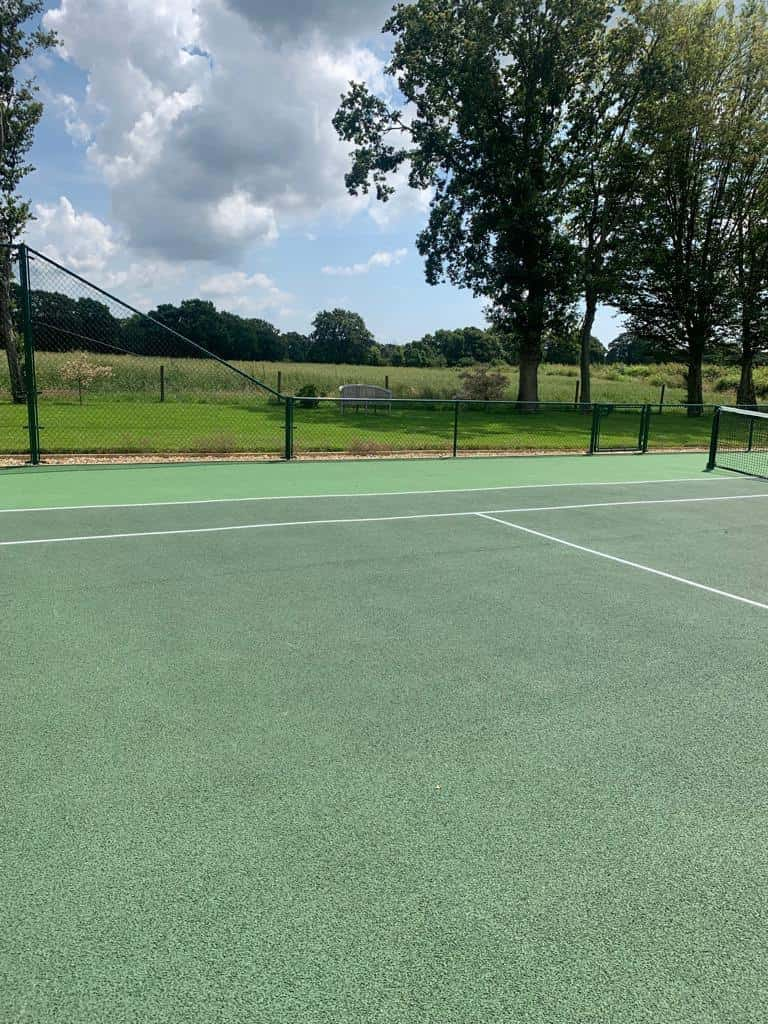
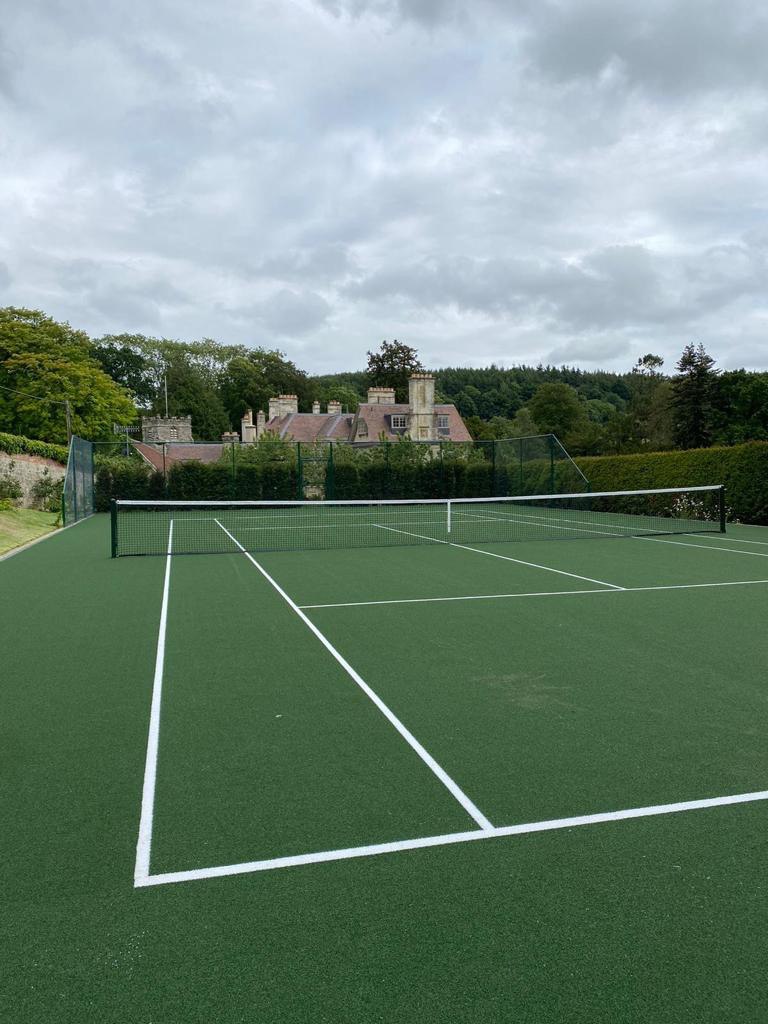
For tennis courts in Kent, UK, professional resurfacing can restore much more than appearance. When the underlying court remains suitable, resurfacing can create a more consistent playing surface, improve traction and help restore predictable ball behaviour. The result can be a court that feels noticeably different to play on, even though its basic dimensions and layout remain unchanged.
What Happens to a Tennis Court Surface as It Ages?
Outdoor tennis courts experience continuous exposure to weather alongside repeated foot traffic and regular play. Over time, this can gradually alter the characteristics of the playing surface.
Wear does not necessarily occur evenly. Baselines, service areas and other frequently used sections can deteriorate differently from less heavily trafficked parts of the court.
Depending on the surface and its condition, an ageing court may begin to show:
- Reduced or inconsistent grip
- Areas with different surface textures
- Faded or worn coatings
- Minor surface irregularities
- Cracking or localised deterioration
- Less predictable ball bounce
- Noticeable differences between heavily and lightly used areas
Resurfacing aims to address appropriate surface-level deterioration and restore a more uniform playing environment.
A More Consistent Ball Bounce
Consistency is one of the most important characteristics of a good tennis court.
Players naturally anticipate how the ball will react after making contact with the surface. When different sections have worn at different rates, that response can become less predictable. A ball may behave normally in one area but react differently when it lands on a deteriorated section.
Professional resurfacing can restore greater uniformity across the playing area. By dealing with suitable defects and renewing the playing surface correctly, the variations caused by general wear can be reduced.
This creates a court where players can concentrate more on their game rather than adjusting for inconsistent areas.
Surface Texture Influences the Pace of Play
The texture of a tennis court contributes to the way the ball interacts with the surface.
As an older court wears, its original texture can gradually change. Some sections may become smoother while others retain more of their original characteristics. These differences can influence ball speed and response.
A correctly specified resurfacing system can restore a more consistent texture across the court. The intended playing characteristics depend on the type of surface being installed, so resurfacing should be approached as a technical process rather than simply applying a new layer over the existing court.
Improved Traction Can Change Player Movement
The condition of the surface affects players as much as it affects the ball.
Tennis involves rapid changes of direction, acceleration, controlled stopping and repeated lateral movement. A worn court may offer inconsistent traction, particularly when some areas have become smoother than others.
Resurfacing can provide a more uniform surface underfoot. Players can then experience more predictable grip across different parts of the court.
Consistency is particularly important because changing levels of traction can affect confidence of movement. A court that responds similarly from one area to another generally provides a more dependable playing experience.
Removing the Feeling of Playing Around Worn Areas
Regular users of an ageing tennis court often become familiar with its problem areas.
They may know that a particular section produces an unusual bounce, that one baseline feels different underfoot or that certain areas need to be approached differently during play. These adjustments can gradually become normal.
A successful resurfacing project can remove many of these surface-related inconsistencies. Rather than adapting their game to particular sections, players can use the complete playing area with greater confidence.
This can make an older court feel considerably more enjoyable and purposeful again.
Resurfacing Can Improve the Court’s Overall Level of Consistency
A tennis court does not need to contain one dramatic defect to perform poorly. Numerous small variations can collectively affect the playing experience.
Slight differences in texture, minor depressions, localised wear and deteriorating coatings can make the surface feel inconsistent even when each individual problem appears relatively small.
Assessing the entire court before resurfacing allows these issues to be considered together. Appropriate preparation can then be carried out before the new playing surface is installed.
This preparation is important because the quality of the finished court depends heavily on the condition beneath the final surface.
Existing Defects Need Attention Before Resurfacing
Resurfacing should not simply hide existing problems.
If an older court contains cracks, localised deterioration or surface irregularities, these need to be assessed before a new system is applied. Covering a defect without understanding its condition can allow the underlying problem to affect the renewed surface.
A professional assessment helps determine which issues relate primarily to the playing surface and which may indicate deterioration elsewhere within the court construction.
This distinction is important when deciding whether resurfacing alone is appropriate.
Drainage Performance Should Be Considered
Water management has an important relationship with the long-term condition of an outdoor tennis court.
Areas where water repeatedly collects can experience different levels of deterioration from sections that drain effectively. Persistent standing water can also interfere with the usability of the court and highlight irregularities within the surface.
Before resurfacing an older tennis court, drainage behaviour should therefore form part of the wider assessment.
If water-related problems are contributing to surface deterioration, understanding them before work begins helps ensure that the resurfacing project addresses the court’s actual condition rather than concentrating only on appearance.
Court Preparation Has a Major Influence on the Result
The finished playing surface is only part of a resurfacing project. Proper preparation is essential if the new surface is to perform consistently.
The existing court should be assessed for defects, contamination, loose material and irregularities that could interfere with the resurfacing system. Suitable remedial preparation can then be undertaken where necessary.
Taking time to prepare the existing surface correctly helps the finished court achieve a more uniform texture and playing response.
This is one reason professional resurfacing involves considerably more than simply refreshing the visible surface.
New Court Markings Improve Visual Definition
Although playing characteristics are central to resurfacing, visual clarity also influences how the court feels to use.
Older line markings can become faded, worn or less distinct against the surrounding playing surface. Resurfacing provides an opportunity to restore clear court markings as part of the finished installation.
Sharper visual definition makes the playing area easier to read and gives the court a cleaner, more purposeful appearance.
Combined with renewed surface texture, this can make an established tennis court feel substantially refreshed without changing its fundamental layout.
Can Every Older Tennis Court Be Resurfaced?
Not necessarily.
Resurfacing is most appropriate when the underlying construction remains suitable and the principal deterioration is within areas that can be effectively prepared and renewed.
If there are more significant problems beneath the surface, simply installing a new playing layer may not provide the intended result.
A detailed inspection is therefore an important first step. It allows the existing court to be assessed as a complete structure and helps determine whether resurfacing is suitable or whether additional remedial work should be considered first.
Why Professional Assessment Matters
Every older tennis court develops differently. Its original construction, amount of use, previous maintenance, drainage performance and exposure to weather can all influence its current condition.
At Tennis Court Construction Kent, we assess the existing court before recommending an appropriate approach. This helps identify surface deterioration, areas requiring preparation and any defects that should be addressed before resurfacing takes place.
For tennis courts across Kent, UK, this considered approach helps ensure that resurfacing is undertaken for the right reasons and that the finished surface is designed to provide consistent performance rather than simply an improved appearance.
Conclusion
Resurfacing can significantly change the way an older tennis court plays. By restoring a more consistent surface texture, improving traction and reducing variations across worn areas, it can help create more predictable ball behaviour and a more dependable surface for player movement.
However, the quality of the result depends on understanding the condition of the existing court first. Cracking, irregularities, drainage behaviour and other underlying concerns should be assessed before a new playing surface is installed.
If your tennis court in Kent, UK has become worn, inconsistent or noticeably different to play on, Tennis Court Construction Kent can assess its condition and determine whether professional resurfacing is an appropriate solution. A properly prepared and renewed surface can help restore consistent playing characteristics while making much better use of the existing court.
Call us on: 01580 234 693
Click here to find out more about Tennis Court Construction Kent
Click here to complete our contact form and see how we can help with your court needs.